Establishing and development of hydro turbine construction
The decision to organize hydro-turbine production at KhTGP was adopted by the Ministry of Heavy Machine Building of the USSR in late 1952.
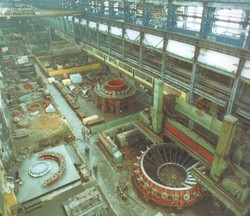
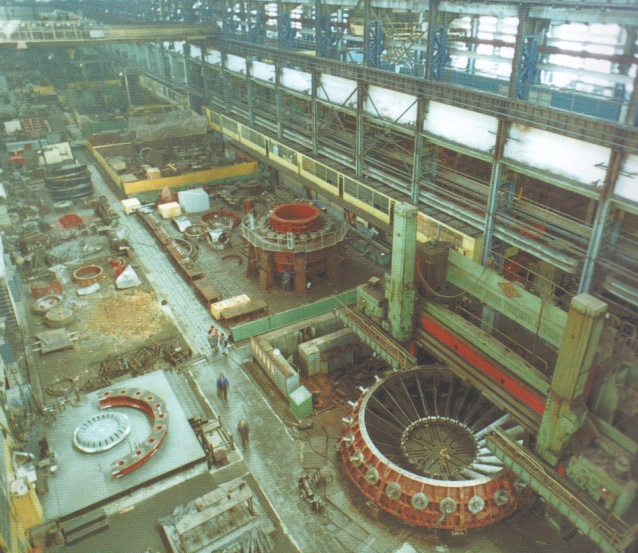
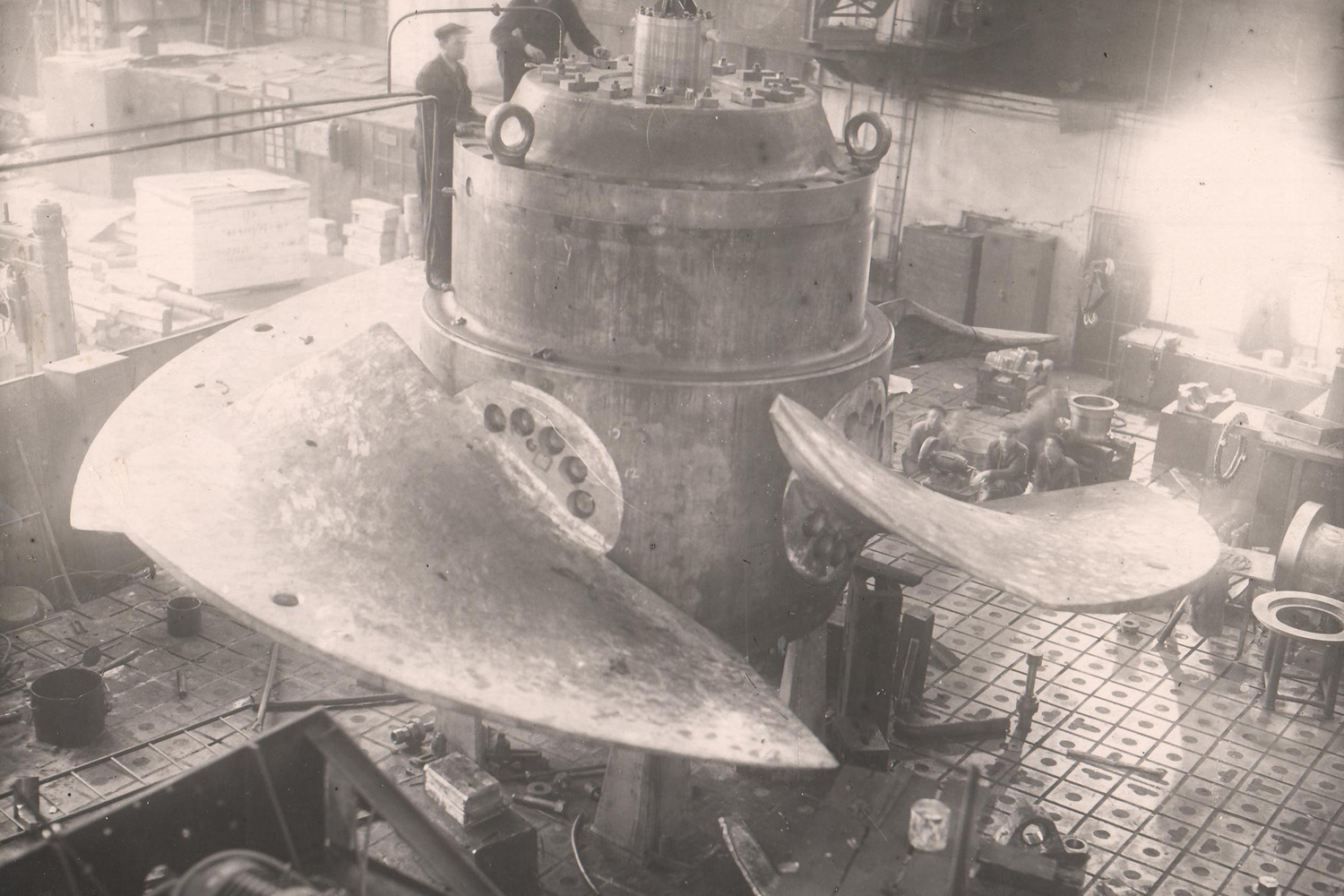
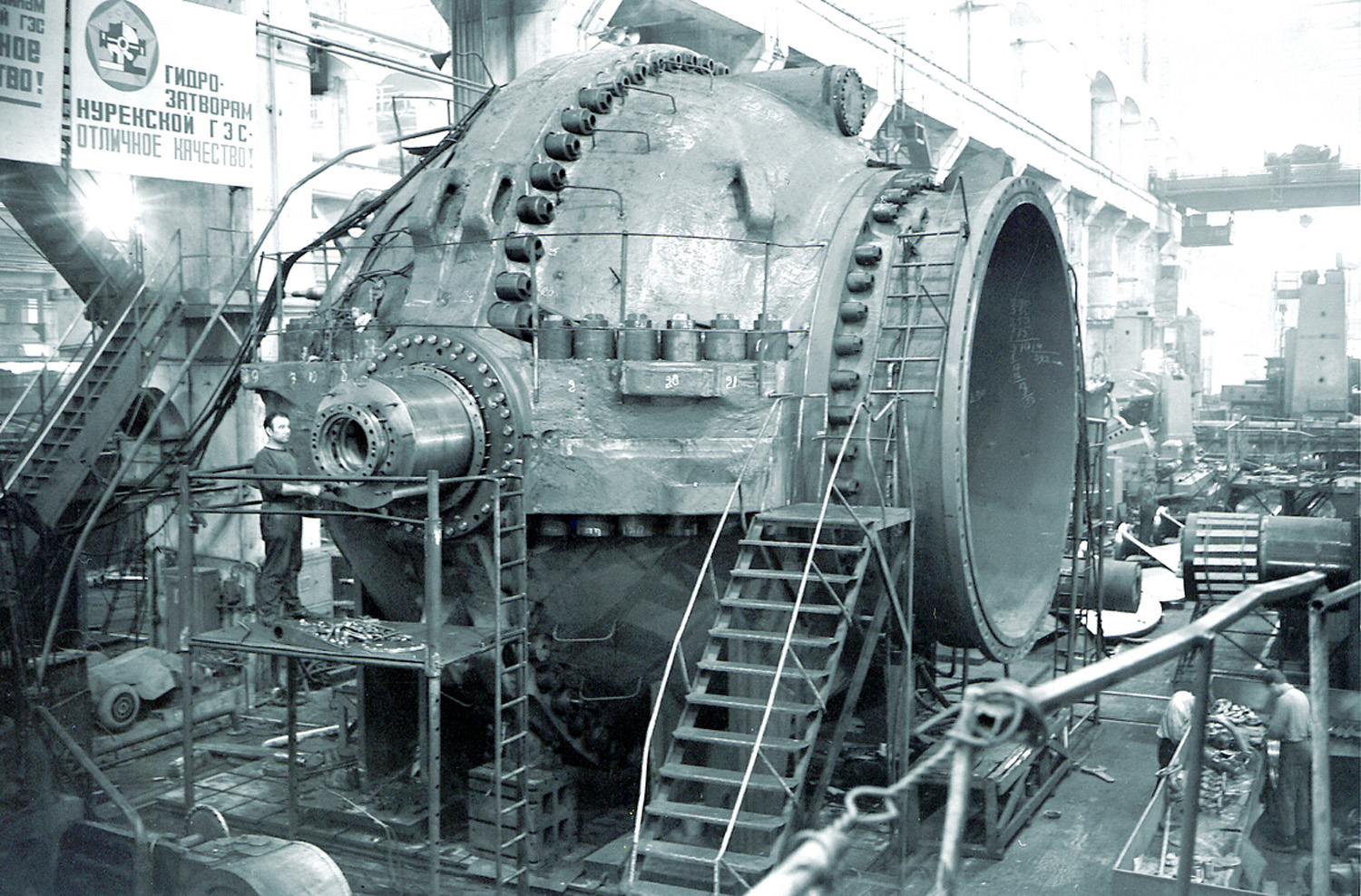
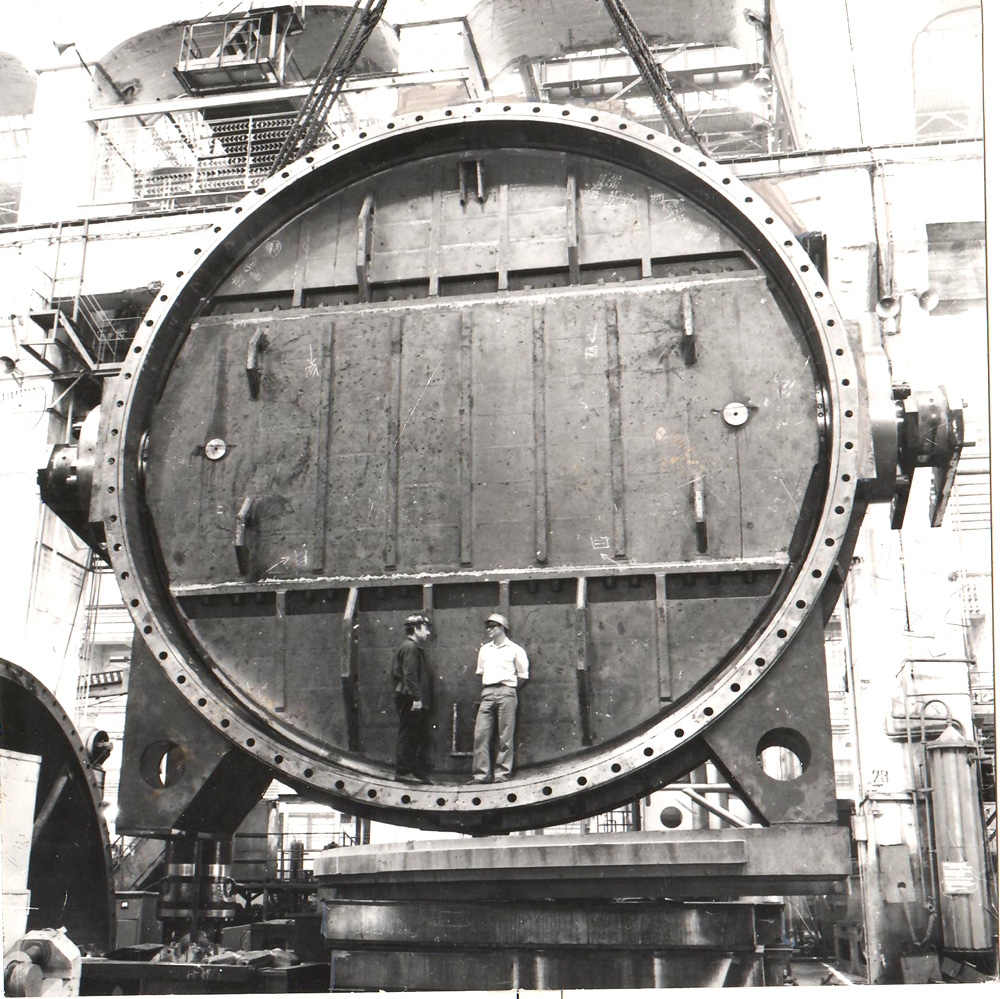
1953 was a year of development of the new production. A special workshop for production of hydraulic turbines and valves was built and put into operation.
In March 1953, a Special Design Bureau for the development of projects of hydro turbines was established.
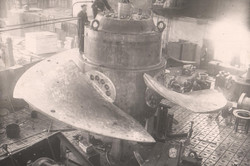
In 1954 they started to perform vertical adjustable-blade turbines at the Kharkov Turbine Plant. The first hydro turbine for the Kakhovka HPP with a unit capacity of 51.8 MW, which was released in December 1954, has become a real challenge for all staff of the plant.
In the period from 1953 to 1956 it was mastered production of the first adjustable-blade turbines with a unit capacity of 21 to 90 MW and runner diameter of 3.7 to 8 m for Kakhovka HPP, as well as Ondsk HPP, Irkutsk HPP and Pavlovsk HPP.
As early as 1956 the first vertical adjustable-blade turbines for Novosibirsk HPP and Kremenchug HPP were manufactured under the plant SDB’s developments of hydro turbines.
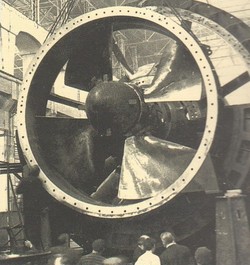
Between 1958 and 1965 the first commercial production of radial-axial turbines with unit-cast runner with a diameter of about 2 meters for Yerevan and Perepadny HPP, butterfly valves with a diameter of 1.3-2.2 m for Alma-Ata HPP and pumping stations, as well as large Kaplan turbines with a rotor diameter of 9.3-10.3 m for the Dneprodzerzhinsk and Saratov HPP.
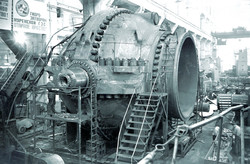
For the first time in the world practice in the design of large Francis turbines of Nurek HPP it was realized the original idea of using of replaceable runners for start-up heads (90-175 m) and steel-reinforced concrete scroll cases, which gave a considerable economic effect and further elaborated in the global hydropower.
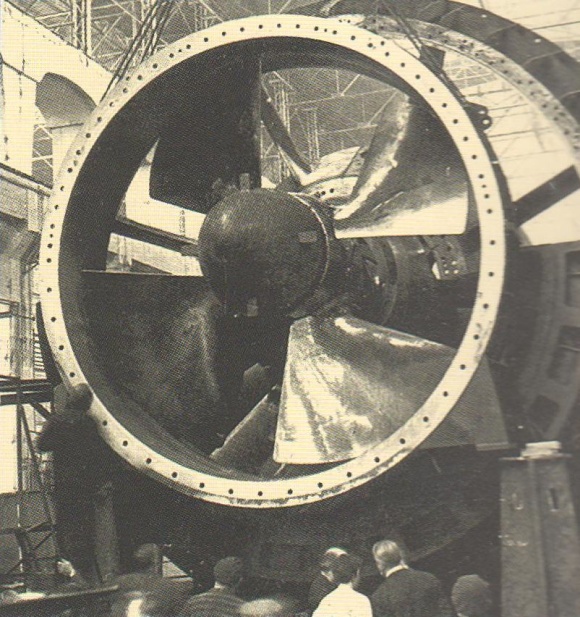
The result of many years of creative work (1961-1974) was the development of design and development of production of large series of horizontal capsule hydro turbines, which were the most adapted for the use of small heads of lowland rivers, such as ПЛ 15-ГК-600 with a capacity of 19.2 MW for the Kiev HPP (20 units ) and Kanev HPP (24 units).
For development of the capsule units in power engineering, a group of employees for the first time was awarded the title of laureate of State Prize of Ukraine in the field of science and technology in 1972.
In 1964 hydro turbine laboratory was commissioned, it was equipped with stands for experimental studies of model units of hydraulic turbines, reversible hydraulic machines and hydro valves and sealing of shafts and blades, bearings and other various mechanisms and pieces of equipment. As early as 1965-1972 for the first time here there were performed complex research projects on the development of the flow path of the Kaplan turbines and propeller-type turbines for the Dnepro HPP-2. As a result, an increase in designed installed capacity from 830 to 908 MW the project was provided, which gave a considerable economic effect.
The joint work of the Kharkov turbine constructors and power engineers of Ukraine on the establishment and development of high-performance propeller hydro turbines for the second stage of the Dnepro HPP was awarded in 1980 the State Prize of Ukraine in the field of science and technology.
Kharkov turbine constructors have a priority in the creation and development of the country's first reversible radial-axial hydraulic units, which sequentially perform functions of the turbine and the pump in the 1968-1978.
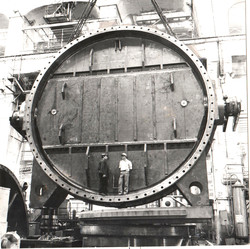
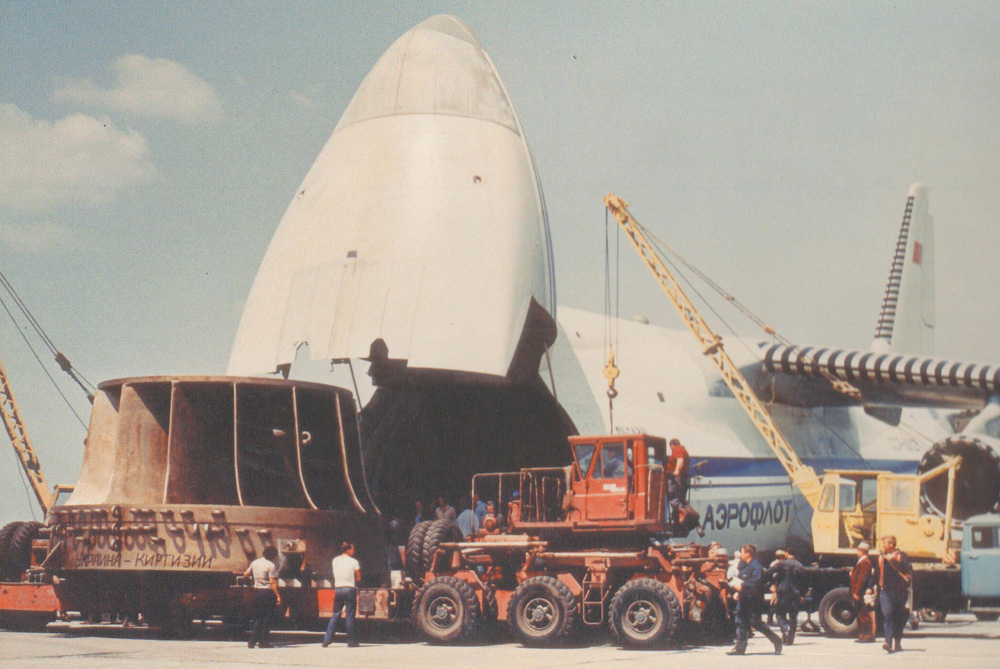
The first large one-piece runners weighing 62.5 tons were produced at the plant for Francis turbines of Kurpsai HPP (Kyrgyzstan); outer diameter – 5.22 m, height – 2.83 m.
In the early 80ies Kharkov turbine constructors have created the world's largest Kaplan hydraulic unit with a capacity of 230 MW. It was designed for Shulbinskaya HPP, which being constructed on the Irtysh River in northeastern Kazakhstan.
In general, the period of 1980-1990 has been particularly fruitful in the number of start-up Kharkov turbines and valves in different regions of the planet. During this time, there were put into operation:
- 14 turbines at HPP "Salto Grande" (Argentina, Uruguay) with a capacity of about 2 million KW;
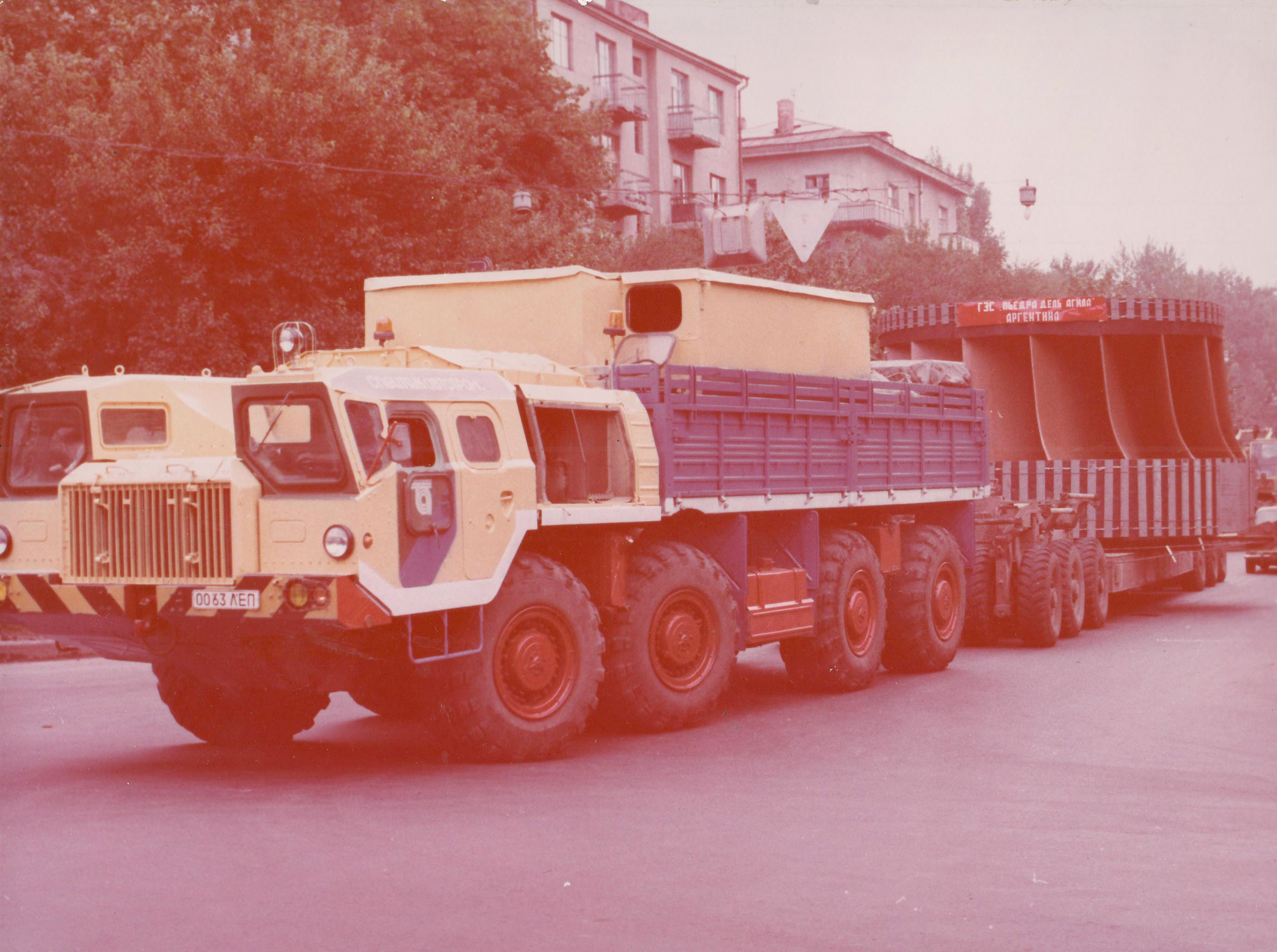
- 4 turbines for HPP "Piedra del Aguila" (Argentina) with a capacity of 1.4 million. KW;
- 3 turbines at HPP "Aguamilpa" (Mexico) with a capacity of about 1 million KW;
- 3 turbine with a capacity of 103 MW at HPP "Purnari-1" and 2 turbines with a capacity of 15.5 MW each at HPP "Purnari-2" (Greece);
- 2 turbines with a capacity of 77 MW each for HPP "Thac Mo" (Vietnam), and others.
Foreign customers were convinced of the efficiency and reliability of the Kharkov turbines, which enabled the company to win a high reputation in the world.
After startup of HPP "Salto Grande" Kharkov turbines were recognized as one of the best in terms of reliability and efficiency among similar large turbines of this type not only in Argentina and Uruguay, but throughout Latin America.
HPP "Aguamilpa" is considered to be one of the best hydroelectric plants throughout the Americas, and Kharkov hydro turbines – the best among similar energy machines in Latin America.